

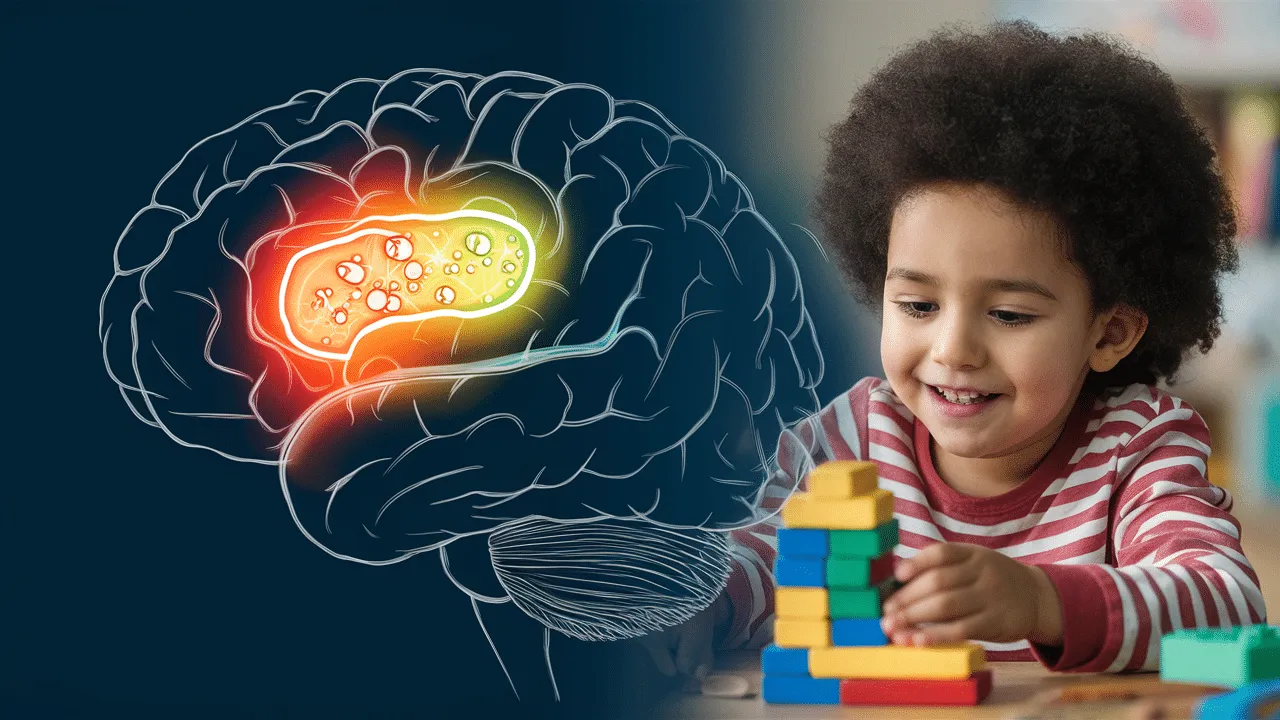
Autism Spectrum Disorder (ASD) is a complex neurodevelopmental condition that arises during the early stages of brain development and limits an individual’s interaction with the outside world.
While traditional approaches offer symptomatic support, stem cell therapies administered under the umbrella of regenerative medicine aim to directly repair the biological infrastructure in the brain and strengthen neuronal communication.
What is Autism Spectrum Disorder (ASD)? Neurobiological Foundations and Early Diagnosis
Autism is not merely a behavioral difference, but a neurobiological disorder stemming from the different structure of the brain’s neural networks (connectome) and synapses (intercellular communication points).
Modern medical data shows that autism is based on genetic predispositions as well as oxidative stress and immune system irregularities in the brain.
The Most Prominent Symptoms of Autism: Social Interaction and Communication Problems
Early diagnosis has a multiplier effect on the success of stem cell therapy. The main symptoms, which can be observed from the 14th month onwards, are as follows:
Lack of Eye Contact: Not responding when called by name or limited visual contact.
Language and Speech Delays: Limited vocabulary compared to peers or echolalia (repeating what is heard).
Repetitive Behaviors: Hand flapping, rocking, or excessive adherence to routines.
Sensory Sensitivity: Extreme discomfort with loud noises or certain textures.
Spectrum Types: Asperger Syndrome, Atypical Autism, and Rett Syndrome
Autism does not follow a single pattern; each child is at a different point on the spectrum:
Asperger Syndrome: Language development is usually normal, but there are difficulties with social interaction and motor skills.
Atypical Autism (PDD-NOS): Symptoms are mild or do not meet the full diagnostic criteria.
Rett Syndrome: A genetic-based type that is usually seen in girls and involves severe physical and mental regression.
How Does Stem Cell Therapy Affect Autism?
Stem cells are like the body’s “smart repair kits.” The main goal in autism treatment is for stem cells to interact with damaged tissues when they reach the brain, triggering a natural healing process.
Eliminating Chronic Inflammation in the Brain and Controlling Neuroinflammation
Scientific research has proven that individuals with autism have a type of “inflammation” in their brains called microglial activation.
Stem cells suppress this inflammation by secreting anti-inflammatory cytokines, creating an environment in which nerve cells can function more healthily.
Parakrine Effect and the Role of Exosomes in Neural Transmission
While cells themselves can transform into new neurons, the real miracle occurs through the Paracrine Effect. Cells stimulate dormant neurons in the brain by secreting micro-packages called exosomes, supporting new blood vessel formation (angiogenesis) and accelerating synaptic transmission.
Scientific Evidence: Clinical Improvements in CARS and ISAA Scores
The success of the treatment is measured by clinical tests rather than subjective interpretations:
CARS (Childhood Autism Rating Scale): A decrease in scores after treatment indicates a reduction in the severity of autism.
ISAA (Indian Autism Assessment Scale): Used to track the development of social interaction and sensory responses.
PET/CT Scans: Increased glucose metabolism and improved blood flow in the brain have been observed after cell transplantation.
Recommendation from Prof. Dr. Erdinç Özek: “The question parents ask most often is, ‘Will my child be completely cured?’ Stem cell therapy is not a magic wand, but a scientific support that increases the brain’s biological capacity. The earlier the treatment begins and the more it is supported by rehabilitation training, the higher the success rate.”
Comparative Treatment Approaches Table
The following table will help you understand the differences in stem cell sources and application methods:
| Criterion | Mesenchymal Stem Cells (Umbilical Cord Blood/Fat) | Traditional Drug Therapies |
| Mechanism of Action | Tissue repair and neuro-inflammation control. | Symptomatic control (hyperactivity, sleep, etc.). |
| Sustainability | Long-term potential for biological improvement. | Temporary effect while the drug is being used. |
| Administration route | Intrathecal (spinal) or IV (intravenous). | Oral (by mouth) daily use. |
| Side Effects | Rare (mild fever, headache). | Loss of appetite, drowsiness, metabolic changes. |
Anonymized Case Analysis: Clinical Observations
Case 1 (4 years old, severe ASD): The patient, who had no eye contact and did not speak at all, received 3 sessions of umbilical cord-derived mesenchymal stem cell therapy. At the end of the 6th month, it was confirmed by CARS scores that the patient had started to use basic words such as “mom, dad” and that the response time to commands had decreased by 50%.
Case 2 (7 years old, atypical autism): In a patient with aggression and intense sensory sensitivity, an increase in social interaction, improved ability to play with peers, and stabilization of sleep patterns were observed within 1 year after the transplant.
Application Protocols: How Are Stem Cells Transplanted into the Brain?
The success of stem cell therapy in autism depends not only on the quality of the cells but also on how effectively these cells reach the target area, the brain tissue.
The application process is managed within a personalized protocol based on the patient’s age, weight, and symptom severity.
Intrathecal (Spinal) Application and Crossing the Blood-Brain Barrier
The brain has a very powerful defense mechanism called the “blood-brain barrier” that protects it from external factors.
Many drugs and supplements cannot reach brain tissue because they cannot cross this barrier. The intrathecal method (lumbar puncture) involves injecting stem cells directly into the cerebrospinal fluid (CSF) using a needle.
This allows the cells to migrate directly to the brain tissue without encountering any barriers (homing effect) and initiate neuronal repair via the shortest route.
Intravenous (IV) Support and Systemic Immune Regulation
Autism is not only a condition limited to the brain, but also a systemic immune and digestive system disorder. Intravenous (IV) administration allows stem cells to spread throughout the body via the bloodstream. This method is particularly effective in:
Reducing overall inflammation (inflammation) in the body,
Regulating the immune system,
Improving gastrointestinal issues.
The highest efficacy is generally achieved with protocols that combine intrathecal and intravenous methods.
Stem Cell Sources: Umbilical Cord (Wharton’s Jelly) and Autologous Cells
The source of the cells used in treatment is the most important stage of the treatment plan:
Umbilical Cord (Wharton’s Jelly): These are young, dynamic cells with the highest proliferation capacity. They are prepared in a laboratory environment (under GMP standards). Although they are allogeneic, the risk of rejection by the immune system is negligible.
Autologous Cells (Patient’s Own Fat Tissue): These are mesenchymal stem cells obtained from the patient’s own umbilical fat. Since they carry the patient’s own genetics, they are 100% compatible.
Treatment and Recovery Process Comparison Table
| Feature | Intrathecal (Spinal) Administration | Intravenous (Vein) Administration |
| Primary Target | Direct Brain Repair | Immune and Systemic Regulation |
| Barrier Crossing | Bypasses the Blood-Brain Barrier | Limited Barrier Crossing |
| Recovery Period | 24-Hour Observation Recommended | Immediate Return to Daily Life |
| Clinical Effect | Cognitive and Motor Development | Social Adaptation and Digestive Health |
Recommendation from Prof. Dr. Erdinç Özek: “The transfer of stem cells to the brain is not a surgical operation; however, it is a delicate medical procedure that requires sterilization and expertise. Administering the cells into the spinal fluid, known as ‘cerebrospinal fluid’, is the most scientific method for maximizing effectiveness. Parents remaining calm during this process and ensuring the child adheres to the first 48-hour rest period after treatment positively impacts the speed of recovery.”
Goals of Stem Cell Therapy for Autism
During the 6-month period following treatment, the following clinical improvements are targeted through the growth factors and exosomes secreted by stem cells:
Cognitive Capacity: Increased speed of information processing and reduced attention deficit.
Communication Skills: Establishing meaningful eye contact, responding to one’s name, and expanding vocabulary.
Behavioral Control: Decrease in the intensity of hyperactivity and repetitive (stereotypical) movements.
Physical Improvement: Establishment of a sleep routine and normalization of digestive system functions.
H2: Gains Targeted by Stem Cell Therapy in Autism
The changes expected after stem cell transplantation unfold over time, much like a “seed turning into a tree.” As the cells reduce neuroinflammation in the brain and new synaptic connections are formed, the child’s perception of the world begins to change. Prof. Dr. Erdinç Özek emphasizes in his clinical observations that gains generally become apparent starting from the second month after treatment.
H3: Cognitive Development, Speech, and Increased Learning Capacity
One of the most tangible outcomes of cellular repair is mental clarity. With treatment:
The speed of information processing increases; the child understands and applies the commands given to them in a shorter time.
Memory functions strengthen; the ability to learn new words and use them in the correct context develops.
Thanks to the increase in learning capacity, the child’s benefit from the special education programs they receive is multiplied.
H3: Social Adaptation, Eye Contact, and Reduction in Repetitive Behaviors
Improvements in the areas of the brain responsible for social interaction strengthen the bridge to the outside world:
Eye Contact: More meaningful, prolonged, and purposeful visual contact is established.
Social Participation: Interest in peers increases, and the child begins to interact with their surroundings, emerging from their inner world.
Stereotypical Movements: With reduced stress and anxiety levels, the frequency and intensity of repetitive behaviors such as hand flapping and rocking decrease.
H3: Digestive System (Stomach-Intestine) Functions and Immune Support
A large proportion of children with autism have chronic gastrointestinal problems and food sensitivities. The systemic anti-inflammatory effect of stem cells:
Helps balance gut flora and reduce absorption problems.
Regulates the immune system, reducing the frequency of illness and the severity of allergic reactions.
Treatment Process, Safety, and What Parents Need to Know
Stem cell application is not a “surgery” but an advanced medical procedure. The safety of the process depends on the meticulousness of the preparation phase.
Personalized Treatment Plan: Age, Weight, and Symptom Analysis
Since every child is at a different point on the spectrum, there is no “standard” dosage. In the preliminary assessment:
The number of cells to be transplanted (in millions/kg) is calculated based on the child’s weight.
The combination of intrathecal (spinal) and intravenous routes is determined based on the severity of symptoms.
The child’s medical history and current test results are reviewed to establish the safest protocol.
Side Effects of Treatment and Long-Term Safety Profile
Stem cell therapy has a safe profile when administered under the right conditions. Possible temporary conditions that may occur after administration include:
Mild fever or fatigue within the first 24-48 hours.
Short-term sensitivity at the injection site.
Rarely occurring and temporary headaches.
Important: Mesenchymal stem cells do not carry a risk of tumor formation and are not rejected by the immune system.
Post-Treatment Follow-Up: 6-Month to 1-Year Observation Period
Although the biological effect of stem cells begins immediately, behavioral results require patience.
First 3 Months: This is the stage where inflammation in the brain decreases and the “quiet” period passes.
6 Months: This is the period when social and cognitive gains become most apparent and CARS scores are measured again.
1 Year: The sustainability of the gains achieved is evaluated, and the need for a supportive “booster” session is assessed if necessary.
Recommendation from Prof. Dr. Erdinç Özek: “Stem cell transplantation is not an end, but a new beginning. The child’s special education should not be interrupted after treatment; on the contrary, this new capacity in the brain should be supported with intensive education. Cells pave the way, education teaches how to walk that path.”
Comparative Process Table
| Stages | What is Done? | Duration |
| Preparation | Analyses, cell selection, and protocol determination. | 1-2 weeks |
| Application | Cell transplantation via the abdomen or vein. | 30-60 Minutes |
| Observation | Resting in a clinical setting and monitoring initial reactions. | 2-4 hours |
| Follow-up | Periodic check-ups and development analysis. | 6-12 Months |
Frequently Asked Questions
Is stem cell therapy a definitive solution for autism?
No, there is currently no 100% definitive cure for autism; stem cell therapy is one of the most powerful complementary methods used to alleviate symptoms, support biological repair, and improve quality of life.
Is there an ideal age range for treatment?
Although the period between 2 and 7 years of age, when brain plasticity is at its highest, is considered the “golden window” for achieving the highest yield, symptomatic improvements can also be observed in older patients.
Are the stem cells used safe, and what are their side effects?
Mesenchymal stem cells produced under GMP standards are genetically stable and do not carry a risk of tumor formation; only mild side effects such as short-term and temporary fever or headache may be observed after application.
When do the effects of treatment begin to appear?
While cellular repair begins immediately, behavioral and cognitive gains are typically observed clinically starting from the second month after transplantation and become more pronounced by the sixth month.
Is a surgical procedure performed during stem cell transplantation?
No, the procedure is not a surgical operation; it is a minimally invasive procedure performed via intravenous (IV) or intrathecal injection into the spinal fluid using a needle in the lower back.
Should special education continue?
Yes, stem cell therapy is not an alternative to special education but rather a supplement to it; the neuronal capacity opened up by the cells must be filled through intensive education.
Expert Opinion and Appointment Process
Each child on the autism spectrum has a different biological map and requires a different level of cellular support. Stem cell therapy is not a standard procedure but rather a scientific process tailored to the patient’s clinical picture.
You can consult with Prof. Dr. Erdinç Özek to assess your child’s current condition, analyze suitability for treatment, and plan personalized protocols.
Scientific References
The information presented in this article is based on current clinical studies and meta-analyses published in the following international peer-reviewed medical journals:
Frontiers in Pediatrics (2024): Clinical Safety and Efficacy of Stem Cell Therapy in Children with Autism Spectrum Disorder. (A June 2024 study demonstrating significant decreases in CARS scores and safety) https://pubmed.ncbi.nlm.nih.gov/38891632/
Stem Cells Translational Medicine (2020): Autologous Bone Marrow Mononuclear Cell Implantation with Educational Intervention in Autism Spectrum Disorder. (Study examining the effects of bone marrow stem cells on social communication) https://pubmed.ncbi.nlm.nih.gov/32462372/
World Journal of Stem Cells: Mesenchymal stem cells as a promising therapeutic strategy for autism spectrum disorder. (Review on the regulatory role of mesenchymal stem cells on neuroinflammation) https://www.ncbi.nlm.nih.gov/pmc/articles/PMC8291040/
Experimental and Therapeutic Medicine: Stem cell therapy for autism spectrum disorders: An update. (Scientific update on application methods and the mechanism of paracrine effects) https://www.ncbi.nlm.nih.gov/pmc/articles/PMC6610731/