


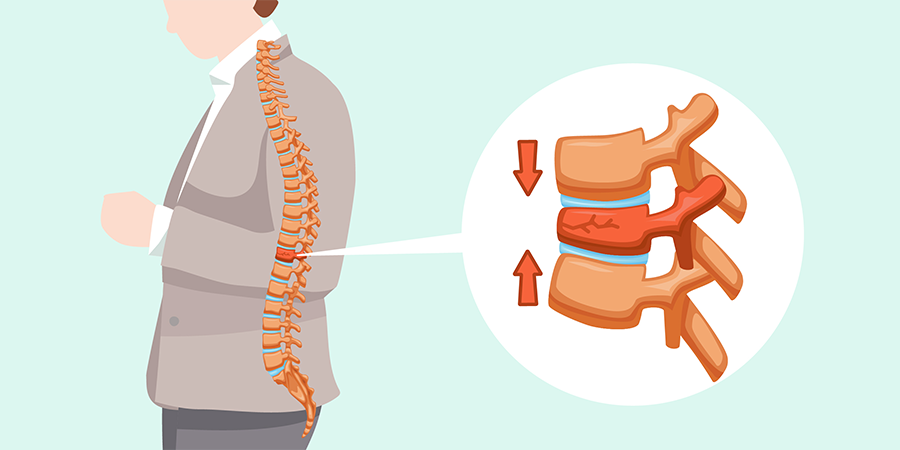
The spine is not only the main supporting column of the body but also a vital structure that protects the central nervous system. Fractures or misalignments (deformities) in this structure can cause not only postural abnormalities but also serious neurological deficits and chronic pain.
What Are Spinal Deformities? Distinguishing Between Scoliosis and Kyphosis
Spinal deformities are deviations from the normal anatomical curvature of the spine. These abnormalities can be congenital or develop during adolescence or due to aging.
Symptoms of Scoliosis and Kyphosis
Scoliosis: This is a sideways curvature of the spine (C or S-shaped). It manifests itself as uneven shoulder levels, shifting of the hips to one side, and a noticeable hump (hunch) on one side of the back.
Kyphosis: Commonly known as a hunchback, it is an excessive forward curvature of the upper spine. It can cause back pain, fatigue, and shortness of breath in advanced cases.
Spinal Fractures and Treatment Methods
Fractures caused by trauma (falls, accidents) or osteoporosis (bone loss) pose a risk of pressure on the spinal cord.
Kyphoplasty and Vertebroplasty: Closed Fracture Treatment
Especially in compression fractures caused by bone loss, medical cement is injected into the fractured vertebra using a needle without opening the skin.
In kyphoplasty, the collapsed vertebra is first inflated with a balloon to restore its height, then frozen. This procedure immediately relieves pain and allows the patient to get up on the same day.
Comparison Table in Spinal Surgery
| Treatment Method | Purpose of Application | Type of Intervention | Recovery Process |
| Kyphoplasty / Vertebroplasty | Compression Fractures | Closed (with needle) | 1 Day (Rapid) |
| Posterior Instrumentation | Severe Fracture and Deformity | Open Surgery | 4 – 8 Weeks |
| Dynamic Stabilization | Movable Screw System | Microsurgery | 2 – 4 Weeks |
Recommendations from Prof. Dr. Erdinç Özek
“The biggest concern in spinal surgery is the fear of paralysis. Thanks to the neuromonitoring technology we use today, we monitor nerve transmissions second by second throughout the surgery. This maximizes surgical safety. The important thing is to perform the correct intervention before the curvature or fracture progresses and the nerves suffer permanent damage. Adhering to the exercise program we provide in the postoperative period is the element that completes the success of the surgery 100%.”
Modern Approaches in Scoliosis and Kyphosis Surgery
The primary goal in deformity surgery is to restore spinal alignment (balance) and stabilize this correction using screw-rod systems (fusion).
Fusion Surgery: If the degree of curvature is high (usually above 40-45 degrees), the vertebrae are fused together to stop progression.
Osteotomy Techniques: In cases of advanced, rigid kyphosis, wedge-shaped pieces of bone are removed to realign the spine to a more upright position.
Clinical Experiences and Case Example
Anonymous Case Analysis: A 14-year-old patient diagnosed with idiopathic scoliosis and a curvature reaching 52 degrees underwent surgery after corset treatment proved ineffective. The “Posterior Instrumentation and Fusion” operation performed by Prof. Dr. Erdinç Özek corrected the curvature to 8 degrees. Nerve safety was ensured during the surgery using neuromonitoring. The patient took their first steps 24 hours after the surgery and returned to all sporting activities at the 6-month follow-up.
Postoperative Recovery and Rehabilitation Process
Patients are typically hospitalized for 3-5 days after spinal surgery. Patients are assisted to stand by a physical therapist within the first 24 hours and are advised to avoid heavy lifting and sudden twisting movements until bone fusion is complete (approximately 3-6 months).
Frequently Asked Questions
Does scoliosis surgery carry a risk of paralysis?
Thanks to advances in technology and neuromonitoring devices that continuously monitor nerve function during surgery, the risk of paralysis in spinal surgery is now extremely low.
When does the pain subside after kyphoplasty (closed fracture surgery)?
Following the closed cementing procedure performed for compression fractures, patients’ mechanical pain typically decreases dramatically immediately after the procedure or within the first 24 hours.
Does height increase after scoliosis surgery?
Since the curvature in the spine is corrected and the spine is brought into a straighter position through surgery, patients may experience an increase in height of between 2 and 5 centimeters, depending on the degree of curvature.
Can individuals who have undergone spinal surgery engage in sports?
Once the healing process is complete and bone fusion has occurred, patients can comfortably engage in spine-friendly sports such as swimming, walking, and Pilates with their doctor’s approval.
Is the use of a brace mandatory after surgery?
Depending on the strength of the screw and rod systems used and the surgeon’s preference, most patients are recommended to use a supportive corset for 1 to 3 months after surgery.
Do spinal fractures in the elderly heal without surgery?
Small and stable fractures may heal with rest; however, surgical intervention is necessary to quickly mobilize the patient in cases of fractures causing severe pain or posing a risk of spinal cord compression.
Detailed Information and Expert Opinion
Spinal health is an area that requires expertise and sophisticated technology. For personalized treatment planning regarding scoliosis, kyphosis, or spinal fractures, you can contact Prof. Dr. Erdinç Özek’s clinic. You can schedule an appointment at our center in Istanbul to learn about our modern surgical solutions.
Scientific References
Spine Deformity Journal: Long-term outcomes of adolescent idiopathic scoliosis surgery. https://www.spine-deformity.org
The Journal of Bone & Joint Surgery: Vertebroplasty vs. Kyphoplasty for compression fractures. https://jbjs.org
PubMed (NIH): Advances in intraoperative neuromonitoring during spinal deformity surgery. https://pubmed.ncbi.nlm.nih.gov