


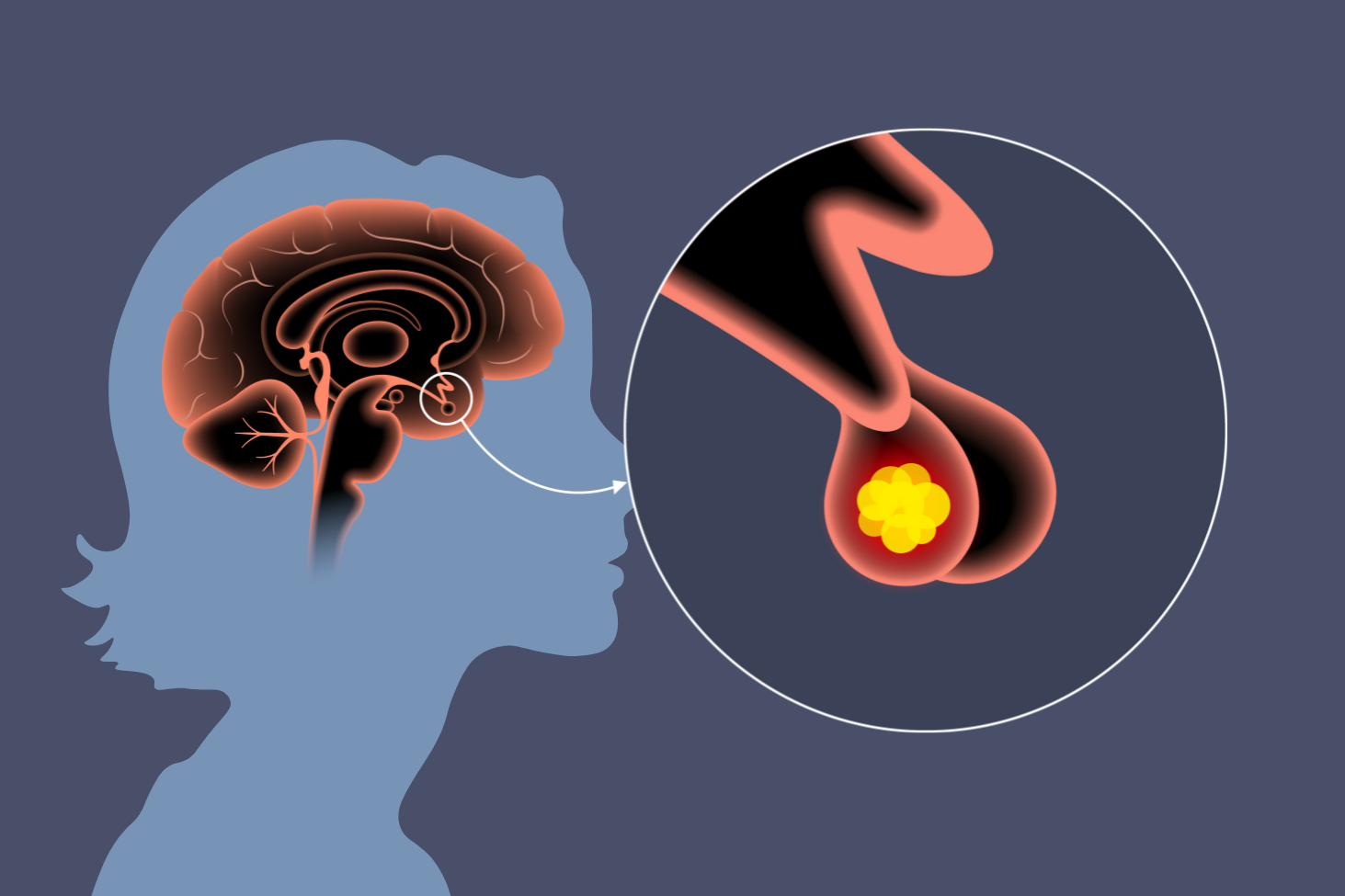
The pituitary gland is an organ located within a bone structure called the “sella turcica” (Turkish saddle) at the base of the brain. It acts as the “conductor” that manages the body’s hormonal balance. Tumors developing in this area can cause a wide range of health problems, from hormonal disorders to vision loss.
What is a Pituitary Adenoma? Types and Symptoms
Pituitary adenomas form due to the uncontrolled growth of cells in the pituitary gland. Although they are usually benign, their location can cause pressure on critical tissues.
Hormone-Secreting and Non-Secreting Adenomas
Functional (Secreting) Adenomas: They disrupt the body’s balance by excessively secreting hormones such as prolactin, growth hormone, or ACTH.
Non-Functional (Non-Secreting) Adenomas: They do not produce hormones but cause symptoms by growing and putting pressure on surrounding tissues (especially the optic nerves).
Distinction Between Microadenoma and Macroadenoma
Tumors smaller than 10 mm are classified as “microadenomas,” while larger ones are classified as “macroadenomas.” Size is the most important criterion in determining the surgical approach.
Pituitary Tumor Symptoms
The most prominent complaints include unexplained headaches, narrowing of the peripheral vision (tunnel vision), irregular hormone levels, excessive fatigue, and acromegaly (enlargement of the hands and feet).
Pituitary Adenoma Diagnosis and Evaluation Process
The diagnostic process requires multidisciplinary collaboration between neurosurgery, endocrinology, and ophthalmology departments.
Medicated Pituitary MRI: Shows the exact location of the tumor and its relationship to vital structures such as the carotid artery.
Endocrinological Tests: Tumor type is determined by measuring hormone levels in the blood.
Visual Field Test: Measures the degree of pressure exerted by macroadenomas on the optic nerve (optic chiasm).
Pituitary Tumor Surgery (Transsphenoidal Surgery)
Today, the gold standard in pituitary surgery is the “Endoscopic Transsphenoidal Approach,” which is performed without opening the skull.
Endoscopic Pituitary Surgery: Closed Surgery Through the Nose
In this method, high-resolution endoscopes are used to enter through the nostrils. The sinus cavities are passed through to reach the pituitary gland directly. There are no external stitches or scars.
| Feature | Traditional Microscopic Surgery | Endoscopic Closed Surgery |
| Field of View | Narrow and straight line | Wide and panoramic view |
| Tissue Damage | Intervention on the nasal septum may be necessary | Minimally invasive, tissue-friendly |
| Recovery time | Moderate (Tampon use is common) | Fast (Usually without packing) |
| Tumor Removal | Difficulty may be encountered at corner points | Full control of corners with camera |
Recommendations from Prof. Dr. Erdinç Özek
“When diagnosed with a pituitary tumor, patients’ biggest concern is brain surgery. However, in modern medicine, we perform more than 95% of this procedure without opening the brain, only through the nose. In the postoperative period, it is just as important as the surgery itself to carefully monitor hormone balance with an endocrinologist. Early intervention plays a key role in reversing vision loss.”
Postoperative Recovery and Follow-up Process
Thanks to the endoscopic method, patients experience a very comfortable postoperative period.
Hospital Stay: A 2-3 day observation period is usually sufficient.
Nasal Care: Crusting inside the nose is normal for the first few weeks; cleaning with special ocean water sprays is recommended.
Hormonal Follow-up: Hormone levels are checked immediately after surgery and at 3 months to determine whether replacement therapy is necessary.
Clinical Experiences and Case Example
Anonymous Case Analysis: A 38-year-old female patient presented with severe headaches and loss of peripheral vision in both eyes. An MRI revealed a 2.5 cm macroadenoma pushing the optic nerve upward. The tumor was completely removed by Prof. Dr. Erdinç Özek using endoscopic transsphenoidal surgery. The patient’s visual field began to expand the day after the surgery; at the 1-month follow-up, visual functions had completely returned to normal.
Frequently Asked Questions
Is pituitary surgery performed by opening the skull?
Today, most pituitary tumor surgeries are performed using the “endoscopic transsphenoidal method,” which is a closed procedure performed directly through the nostrils without opening the skull.
Will there be any scars on the face or nose after surgery?
Since the procedure is performed entirely through the nose, there are no surgical incisions, stitches, or scars that would cause aesthetic imperfections in the facial area.
Does vision loss improve after surgery?
Vision field losses caused by the tumor’s pressure on the optic nerve generally show significant improvement in the early stages after the pressure is relieved through surgical intervention.
How long does a pituitary tumor surgery take?
Although it varies depending on the size and spread of the tumor, endoscopic pituitary surgeries are usually completed within 2 to 3 hours.
Does the tumor recur after surgery?
In benign adenomas, the risk of recurrence is low if the tumor is completely removed; however, patients are monitored at regular intervals with MRI and hormone tests to detect any microscopic cells that may remain.
Is a nasal pack used after surgery?
In modern endoscopic techniques, there is minimal intervention in the nasal tissue, so in most cases, traditional gauze packing is not required, which facilitates the patient’s breathing after surgery.
Scientific References
Journal of Neurosurgery: Endoscopic versus microscopic transsphenoidal surgery for pituitary adenomas. https://thejns.org
The Lancet Diabetes & Endocrinology: Management of non-functioning pituitary adenomas. https://www.thelancet.com
PubMed (NIH): Long-term outcomes of endoscopic endonasal approach in pituitary surgery. https://pubmed.ncbi.nlm.nih.gov
Professional Consultation and Appointment
The treatment of pituitary tumors requires expertise and technological equipment. For detailed information about endoscopic surgical methods and treatment processes, you can contact Prof. Dr. Erdinç Özek’s clinic. You can make an appointment at our center in Istanbul and consult with specialists for multidisciplinary treatment planning.