


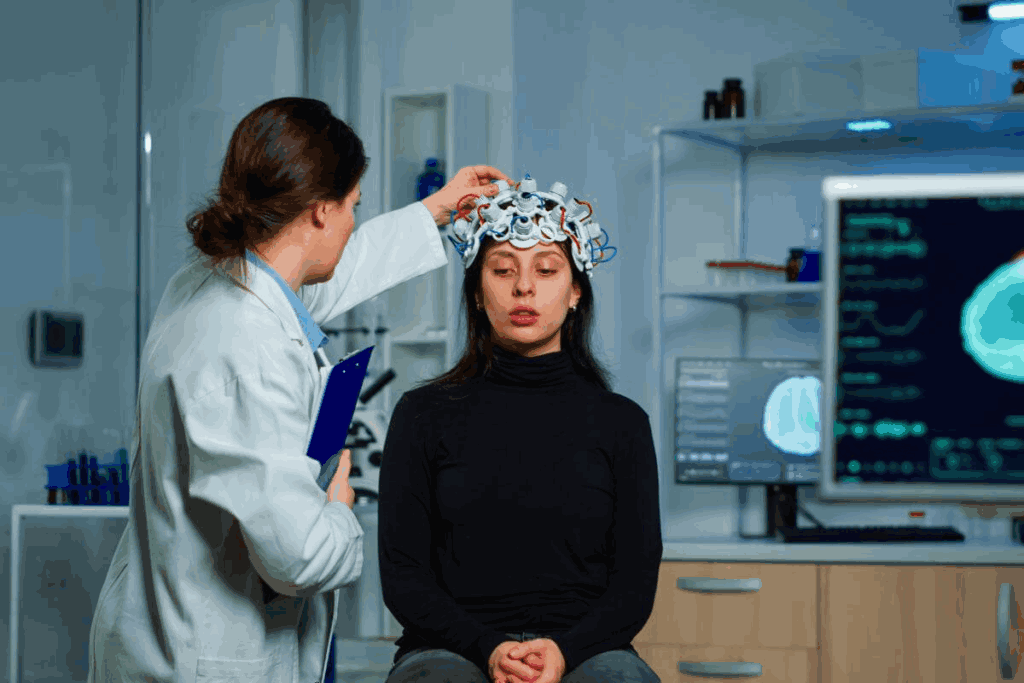
Personality and behavioral changes after brain tumor surgery are among the topics that patients’ relatives are most curious and concerned about.
The brain is a complex structure that governs not only motor skills but also our character, emotions, and social judgments.
The changes that emerge during the post-operative process are directly related to the location of the tumor, the depth of the surgical intervention, and the patient’s overall neurological condition.
In this article, we will examine the reasons behind personality transformations after brain surgery and the medical realities of the recovery process.
The Connection Between Brain Surgery and Personality Change
Personality changes observed after brain tumor surgery do not occur randomly; this situation is entirely related to the anatomical functioning of the brain.
Specific areas of the brain manage functions such as social adaptation, impulse control, and empathy.
The Brain’s Decision-Making Mechanism: The Role of the Frontal Lobe
The primary center for personality changes is typically the frontal lobe.
Located in the front part of the brain, this region is responsible for planning, executive functions, personality expression, and the modulation of social behavior.
A tumor in the frontal lobe region or surgical intervention in this area can temporarily or permanently affect an individual’s “character filter.”
The Relationship Between Tumor Location and Behavioral Effects
Not only the frontal lobe, but also the temporal lobe (memory and emotions) or limbic system (basic instincts) interaction can alter behavior.
Depending on the area where the tumor is pressing or has been removed, the patient may experience excessive joy (euphoria), irritability, or, conversely, emotional numbness.
Common Personality and Behavioral Changes After a Brain Tumor
After surgery, patients often begin to behave differently from the person they used to be.
This situation has a medical explanation and is often part of the brain’s healing process.
Emotional Fluctuations and Aggression
Some patients may become much more easily angered than before surgery or react excessively to minor events.
A weakening of impulse control mechanisms can lead to socially inappropriate responses.
Apathy and Social Withdrawal Symptoms
Apathy is one of the most commonly overlooked symptoms after brain surgery.
The patient may become completely indifferent to activities they once enjoyed, experience a decrease in emotional responses, and sever ties with their surroundings.
Impaired Decision-Making and Judgment
There may be impairments in the ability to think logically and predict the outcome of an event.
This situation may cause the patient to make risky decisions or struggle to manage their daily routines.
Expert Note:
“If your patient behaves rudely or indifferently toward you after surgery, it is not their choice, but the result of biochemical and structural changes in their brain.
Not taking this period personally is critical for both your mental health and the patient’s recovery process.”
Neurological Causes of Post-Surgery Personality Changes
The underlying causes of behavioral changes are not only psychological but also entirely physical.
The Effect of Surgical Intervention on Brain Tissue
Manipulating tissues to remove the tumor can temporarily weaken the synaptic connections between brain cells.
It is expected that functional deviations will occur until the brain adapts to this new situation.
Psychological Reflections of Edema and Inflammatory Processes
Postoperative brain edema suppresses cognitive functions by putting pressure on surrounding tissues.
As edema subsides and inflammation in the brain recedes, personality traits often gradually return to normal.
Neurotransmitter Balance and Hormonal Changes
The surgical process can disrupt the balance of chemicals that regulate mood, such as dopamine, serotonin, and norepinephrine.
This chemical imbalance directly affects the patient’s emotional connection with the world.
Post-Brain Tumor Symptom and Effect Table
| Symptom Type | Affected Area | Behavioral Reflection | Potential for Recovery |
| Loss of Impulse Control | Frontal lobe | Excessive anger, inappropriate jokes | High (as edema decreases) |
| Memory Problems | Temporal Lobe | Forgetting names, confusion | Moderate (With rehabilitation) |
| Emotional Blunting | Limbic System | Not feeling happy or sad about anything | Variable |
| Difficulty Planning | Prefrontal Cortex | Inability to organize daily tasks | Develops over time |
Psychological Trauma and Adaptation Process
Physical damage is not the only cause of personality changes; the difficult process experienced also affects character.
Anxiety Caused by Diagnosis and Post-Traumatic Stress
Receiving a brain tumor diagnosis and undergoing surgery are among the greatest stressors in a person’s life.
Depression or anxiety that develops during this process can make the patient’s post-surgery behavior more “aggressive” or “introverted.”
Post-Surgery “New Self” Perception and Adjustment Problems
The patient may feel inadequate due to physical limitations or cognitive slowdown.
This feeling of “inadequacy” can trigger aggression or complete silence as a defense mechanism.
Are These Changes Permanent? How Does the Recovery Process Progress?
In most cases, these changes are “dynamic” in nature and tend to improve over time.
Temporary Functional Losses and Recovery Timeline
The first 3-6 months are the period when the brain recovers most intensely and the edema completely dissipates.
The severe personality changes observed during this period may give way to a more balanced mood by the end of the first year.
Neuroplasticity: The Brain’s Ability to Restructure Itself
The brain has the ability (neuroplasticity) to transfer the functions of damaged areas to healthy areas.
Cognitive exercises and social stimuli help stabilize personality traits by accelerating this process.
Guide for Families: How to Cope with Personality Changes?
As a caregiver, your attitude is a factor that directly affects the speed of recovery.
Patience and Empathy: Avoid arguing with the patient during moments of anger; remind yourself that this is a medical process.
Set Small Goals: Keep social interactions brief to prevent the patient from becoming tired and stressed.
Provide a Safe Environment: Complex and noisy environments can be triggers for patients with poor impulse control.
When Should You Consult a Specialist?
If the following conditions persist long after surgery, professional help should be sought:
The patient’s tendency to harm themselves or others.
Hallucinations or complete detachment from reality.
Deep and difficult-to-overcome depression.
A sudden deterioration in the ability to speak and understand.
This information is for general informational purposes only; it is recommended that you consult a healthcare provider regarding your specific situation.
Frequently Asked Questions
Is personality change after brain surgery permanent?
Personality changes observed after surgery are generally related to brain edema, medication use, and surgical trauma, and tend to improve significantly during the first 6-12 months of recovery as the brain regenerates itself.
Which tumors are most likely to cause personality changes?
Tumors located in the frontal lobe (forehead), which is the center of personality, social behavior, and decision-making mechanisms, and pressure on the limbic system, which regulates emotions, cause the most pronounced personality changes.
How should one approach a patient who becomes aggressive after surgery?
It should not be forgotten that the sudden anger and aggression displayed by the patient is medically induced; one should avoid arguing with them and continue neurological follow-up by providing a calm, reassuring, low-stimulus environment.
Does brain tumor surgery affect memory and intelligence?
Depending on the location of the tumor and the surgical margin, short-term memory problems or cognitive slowing may be observed; however, modern microsurgical techniques aim to preserve mental functions and promote recovery through rehabilitation by protecting healthy brain tissue.
Is depression a side effect of brain tumor surgery?
Postoperative depression is common due to both chemical changes in the brain and the psychological impact of the difficult process; this condition is usually temporary, but neuropsychological support is beneficial to aid the recovery process.
How long after surgery are personality changes noticeable?
Changes are usually first noticed in the first few days after the patient has fully recovered from the effects of anesthesia and their consciousness has cleared; however, actual behavioral patterns become more clearly observable in the first few weeks after the patient returns to their home environment and engages in social interaction.
Scientific References
Journal of Neuro-Oncology: “Personality changes in patients with frontal lobe tumors”. https://link.springer.com/journal/11060
The Lancet Psychiatry: “Neuropsychiatric complications of brain tumors”. https://www.thelancet.com/journals/lanpsy/home
PubMed (NCBI): “Postoperative behavioral changes in pediatric and adult brain surgery”. https://pubmed.ncbi.nlm.nih.gov/
Mayo Clinic Proceedings: “Cognitive and behavioral effects of cranial radiation and surgery”. https://www.mayoclinicproceedings.org/
World Neurosurgery: “Long-term psychological outcomes after meningioma resection”. [suspicious link removed]