

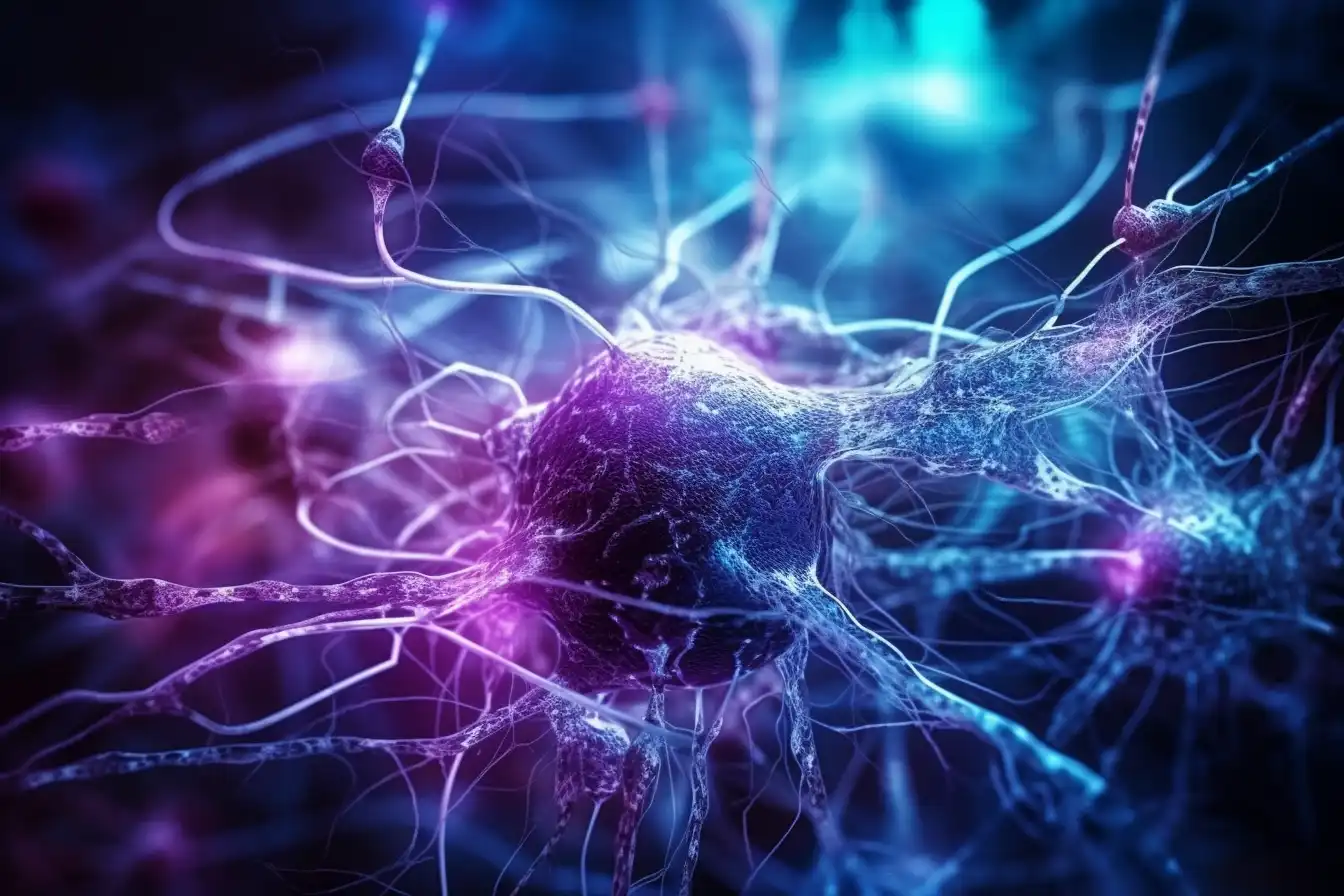
Damage to the central nervous system was once considered “permanent” due to the limited regenerative capacity of neurons.
However, today regenerative medicine, particularly stem cell therapy, is changing this paradigm.
Cellular therapies for neurological diseases aim not only to suppress symptoms but also to repair damaged tissue at a biological level.
What Are Stem Cells? Their Role and Mechanism of Action in Nervous System Repair
Stem cells are the building blocks of the body and have the potential to transform into nerve cells (neurons) or support cells (glia) when given the appropriate signals. When a neurological disorder occurs, these cells initiate a functional recovery process by supporting the brain’s plastic structure.
“Homing” (Migration) and “Paracrine” Mechanisms in Neurological Repair
The success of stem cells depends not only on their numerical quantity but also on their behavior within the brain:
Homing: Transplanted cells follow inflammatory signals (chemokines) released from the damaged area of the brain. Like a compass, they find the center of the damage and settle in that area.
Parakrine Effect: In this mechanism, stem cells function like a “biological factory.” Through the growth factors and exosomes they secrete, they protect dying neurons, trigger new blood vessel formation (angiogenesis), and reduce inflammation in the area.
Advantages of Stem Cells Over Drug Therapies and Therapeutic Time Window
Traditional pharmacological treatments (e.g., clot-dissolving drugs) must generally be administered within the first few hours after the injury.
Stem cell therapy, on the other hand, offers a broader therapeutic window.
| Feature | Traditional Drug Therapy | Stem Cell Therapy |
| Time Window | Very narrow (minutes/hours) | Wide (Can be applied even in the chronic stage) |
| Effect Form | Unidirectional (Chemical intervention) | Multidirectional (Cell change + Protection) |
| Persistence | Dose-dependent temporary effect | Long-term biological repair potential |
| Risk Profile | High risk of systemic side effects | Minimally invasive and personalized adaptation |
Major Neurological Diseases Treated with Stem Cell Therapy
In neurological diseases, a single type of cell does not suit every situation. Cell selection and the method of application must be customized according to the nature of the disease.
Parkinson’s Disease and Dopaminergic Neuron Regeneration
The fundamental problem in Parkinson’s disease is the loss of dopamine-producing neurons in the substantia nigra region.
Stem cell therapy creates a neuroprotective shield that aims to place new dopaminergic neurons in this region and improve the response of existing neurons to drugs such as levodopa.
Prof. Dr. Erdinç Özek: “Stem cell application in Parkinson’s disease is a strategic intervention not only to stop tremors but also to slow down the biological decline in the brain’s motor control center. We have observed that medication doses can be optimized in our patients after treatment.”
Improving Neurological Functions with Stem Cells After Stroke
The “penumbra” region surrounding the necrotic (dead) tissue formed after a stroke is the area where stem cells are most effective.
Cells in this region help restart neural transmission in paralyzed areas by increasing plasticity (the brain’s ability to reorganize itself).
Immunomodulatory Approaches in ALS and Multiple Sclerosis (MS) Patients
In diseases such as ALS and MS, the immune system attacks its own nerve cells.
The greatest advantage of mesenchymal stem cells is their immunomodulatory (immune-regulating) effects.
These cells can slow down myelin sheath damage and motor neuron destruction by calming the aggressive immune response.
Cellular Repair in Huntington’s Disease and Traumatic Brain Injury
Following traumatic brain injury (TBI), stem cells secrete neurotrophic factors that limit tissue loss in widespread damage.
In genetically transmitted diseases such as Huntington’s, clinical studies are ongoing on the integration of new cells to replace cell loss in the striatum.
Childhood Neurological Disorders and Stem Cell Applications
In conditions such as cerebral palsy and autism spectrum disorder, stem cells’ “repair signals” can respond more quickly than in adults because the brain’s developmental capacity is high.
The goal in this group is to enable the child to progress more quickly through the stages of motor and cognitive development.
The Aging Factor and the Effectiveness of Stem Cell Therapy
In neurological diseases, treatment success depends not only on the quality of the transplanted cell but also on the “microenvironment” into which the cell enters. Aging is the most important variable that changes the biological dynamics of this microenvironment.
Chronic Inflammation (Inflammaging) in the Aging Brain and Treatment Management
With age, a low-grade but persistent chronic inflammation state called “inflammaging” develops in the body. This condition causes microglia, the immune cells in the brain, to become hypersensitive.
Treatment Management: Stem cells send a “rejuvenating” signal to the brain by secreting anti-inflammatory cytokines that suppress this inflammatory environment. When planning treatment, the patient’s inflammation scores are analyzed to increase the chances of cell survival.
Effects of Donor and Recipient Age on Cell Proliferation Capacity
The proliferation and differentiation potential of stem cells changes with age.
Donor Factor: Cells obtained from young donors or tissues such as the umbilical cord have higher telomerase activity.
Recipient Factor: In our older patients, “pre-conditioning” (preparation) protocols are applied to facilitate cell engraftment, minimizing the disadvantages associated with age.
Application Methods: How Are Stem Cells Transplanted into the Brain?
Reaching the damaged tissue with the cells is the most technical phase of the treatment. A single method is not ideal for every patient; the route is determined based on the extent of the disease.
Intravenous (IV) and Intrathecal Applications
Intravenous (IV): Typically used to reduce systemic inflammation and preferred in cases of multifocal damage. Cells are directed to the damaged area via the bloodstream in response to signals from that area.
Intrathecal: This involves injecting cells directly into the cerebrospinal fluid (CSF). It is used to bypass the blood-brain barrier, particularly in conditions affecting the entire central nervous system, such as MS and ALS.
Stereotactic Microinjection: Direct Intracerebral Cell Transfer
It is used especially in conditions such as Parkinson’s disease, where the damage is concentrated in a specific area (striatum).
Cells are directly transplanted to the point determined by a three-dimensional coordinate system using microsurgical techniques. This method ensures that the cells reach the target with 100% accuracy.
Blood-Brain Barrier and Optimization of Cell Permeability
The blood-brain barrier, which acts as the brain’s protective shield, can sometimes be an obstacle to treatment.
With the current approaches applied in our clinic, the permeability of this barrier is temporarily optimized, increasing the rate at which cells infiltrate brain tissue.
Treatment Process, Safety, and Success Rates
The safety of the treatment is as important as its effectiveness. The process is carried out under high-standard laboratory conditions and personalized analyses.
Types of Stem Cells Used: Mesenchymal, Neural, and iPSC Cells
The type of cell used is selected based on the type of disease:
Mesenchymal Stem Cells (MSCs): These are the most commonly preferred, safe cells due to their strong anti-inflammatory properties.
Neural Stem Cells: These cells have a high capacity to directly transform into nerve cells.
Induced Pluripotent Stem Cells (iPSCs): These are advanced technology cells produced from the patient’s own cells, with no risk of rejection.
Pre-Treatment Preparation and Personalized Injection Program
Every brain injury is as unique as a fingerprint.
Analysis: The metabolic rate of the damaged area is measured using MRI and PET imaging.
Program: The number of cells to be administered, session intervals, and dosage are calculated mathematically based on the patient’s age and the stage of their disease.
Side Effect Management and Long-Term Safety in Stem Cell Therapy
Stem cell therapy is generally well-tolerated, beyond the risks associated with surgery.
Follow-up: Immune responses and neurological scores are regularly monitored during the first 24 hours after transplantation and in the following months.
Safety: The genetic stability of cells produced in certified laboratories is meticulously monitored for tumor formation risk (teratoma).
Prof. Dr. Erdinç Özek: “Stem cell therapy is not a ‘magic wand’, it is a biological process. The best results are achieved when the patient adheres to physical therapy and neuro-rehabilitation processes, along with the correct cell protocol. Remember, cells build the path; recovery begins by walking that path.”
Frequently Asked Questions About Neurological Stem Cell Therapy
Is stem cell therapy a definitive solution for neurological diseases?
No treatment in medicine can offer a 100% guarantee; however, stem cells are the strongest scientific candidate for tissue repair and functional recovery in cases where traditional methods have failed to produce results.
How long does the treatment process take, and is hospitalization required?
Depending on the application method, the procedure generally takes a few hours; stereotactic methods require short-term observation, while patients can usually be discharged the same day after IV and intrathecal applications.
How long does it take for the cells to reach the brain and show their effect?
Paracrine effects (reduction in inflammation) may be felt within the first few weeks, while the process of neuronal regeneration and functional improvement generally takes 3 to 6 months.
Do immune system cells reject stem cells during transplantation?
Mesenchymal stem cells, in particular, do not usually cause tissue rejection because they have a low immunological profile, and in most cases, immunosuppressive drugs are not required.
Can older patients benefit from this treatment?
Yes, age is not a barrier; however, managing chronic inflammation in the aging brain and applying personalized protocols directly impact the success rate.
Clinical Experiences and Anonymous Case Analyses
Ischemic Stroke Case: A 58-year-old male patient with left-sided motor loss achieved the ability to walk without support thanks to a combined stem cell protocol applied in the first year after the stroke, along with supportive physical therapy.
Parkinson’s Case: In a 65-year-old female patient experiencing side effects due to drug overdose, a reduction in motor fluctuations and a significant improvement in quality of life were observed following mesenchymal stem cell application.
Scientific References
This content is based on the following current and peer-reviewed academic studies in the fields of regenerative medicine and neurology:
The Mechanism of Stem Cells in Neurological Diseases:
Lindvall, O., & Kokaia, Z. (2006). Stem cells for the treatment of neurological disorders. * https://pubmed.ncbi.nlm.nih.gov/16446777/
Cellular Therapy Approaches in Parkinson’s Disease:
Barker, R. A., et al. (2015). Stem cell-based therapies for Parkinson’s disease.
https://pubmed.ncbi.nlm.nih.gov/25732168/
Mesenchymal Stem Cell Applications After Stroke:
Steinberg, G. K., et al. (2016). Clinical Outcomes of SB623 Stem Cell Implantation in Chronic Stroke.
https://pubmed.ncbi.nlm.nih.gov/27255841/
The Effect of Aging and Inflammation (Inflammaging) on Stem Cells:
Zhu, H., et al. (2020). Impact of Aging on Stem Cell Function and Tissue Regeneration.
https://pubmed.ncbi.nlm.nih.gov/32462372/
Immunomodulation in ALS and Multiple Sclerosis:
Petrou, P., et al. (2020). Mesenchymal stem cells in amyotrophic lateral sclerosis and multiple sclerosis.
https://pubmed.ncbi.nlm.nih.gov/33315904/
Expert Opinion and Appointment
The stem cell treatment process for neurological diseases should be planned individually for each patient based on their current clinical condition, age, and medical history. To assess the suitability of the treatment for you or your loved one, learn about the scientific details of the process, and obtain information about personalized treatment protocols, you can schedule an appointment with Prof. Dr. Erdinç Özek.