


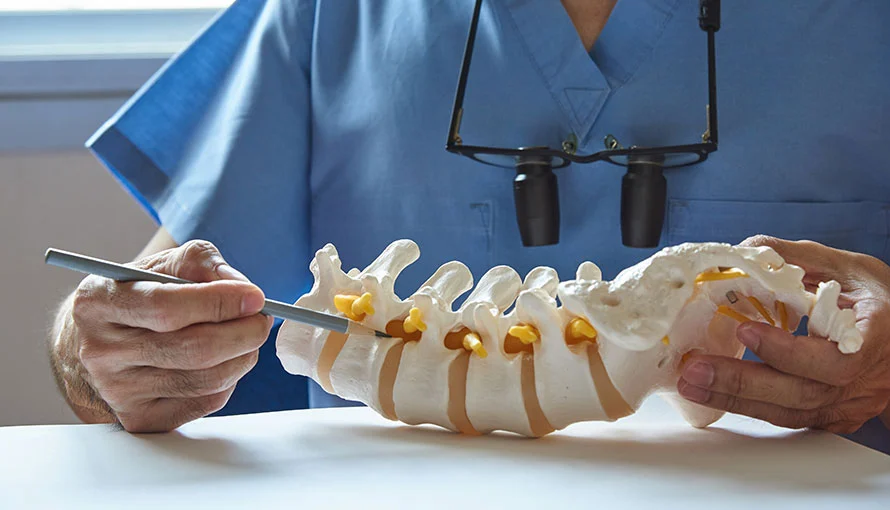
Spinal cord tumors are masses that develop inside the spinal canal or in the spinal cord tissue itself and can exert serious pressure on the nervous system. The treatment of these tumors is one of the most complex areas of neurosurgery, requiring advanced technological infrastructure and precise surgical skills.
What is a Spinal Cord Tumor? Types and Classification
Spinal cord tumors are categorized based on their location. This classification plays a critical role in determining the surgical strategy.
Intramedullary (Intraspinal) and Extramedullary Tumors
Intramedullary: Develop directly within the spinal cord tissue (ependymomas, astrocytomas). This group requires the highest level of precision for removal.
Intradural-Extramedullary: Located within the membrane surrounding the spinal cord but outside the nerve tissue (meningiomas, schwannomas).
Extradural: These are typically tumors originating from the vertebral bone or metastasizing from other organs (metastatic).
Benign and Malignant Spinal Cord Tumors
Benign tumors grow slowly and usually do not recur when completely removed surgically. Malignant tumors, on the other hand, can spread rapidly to surrounding tissues and may require oncological treatments (radiotherapy/chemotherapy) in addition to surgery.
Symptoms and Diagnosis Process of Spinal Cord Tumors
Symptoms vary depending on the level of the tumor (neck, back, waist) and the severity of the pressure it exerts.
Neurological Findings: Pain, Weakness, and Numbness
The most common symptom is persistent back or neck pain that does not go away even at rest and worsens at night. As the tumor grows, weakness in the legs, loss of balance, inability to perform fine tasks with the hands, and, in advanced stages, loss of bladder/bowel control may occur.
Diagnostic Methods: The Role of MRI (Emhar), CT, and Biopsy
The gold standard is contrast-enhanced MRI. This examination shows the tumor’s relationship with the nerves down to the millimeter. Computed tomography (CT) is used to examine the bone structure, and a biopsy sample taken during surgery is used for a definitive pathological diagnosis.
Spinal Cord Tumor Surgery (Microsurgical Approach)
Modern medicine has made it possible to treat spinal cord tumors not “blindly” but under advanced imaging systems.
Use of Microsurgery and Neuromonitoring Technology
Intraoperative Neuromonitoring (IONM) technology, used during surgery, minimizes the risk of paralysis by providing electrical signals the moment the surgeon touches nerve tissue. Incisions made under a microscope keep tissue damage to a minimum.
| Feature | Traditional Surgery | Microsurgery + Neuromonitoring |
| Field of View | Naked Eye / Loupe | 40x Magnification Microscope |
| Nerve Safety | Depends on the Surgeon’s Experience | Real-Time Electrical Monitoring |
| Recovery Time | Long and Painful | Fast and Minimally Traumatic |
| Tumor Removal | Limited Visibility | Maximum Resection Potential |
Recommendations from Prof. Dr. Erdinç Özek
“When diagnosed with a spinal cord tumor, the patient’s greatest fear is paralysis. However, it should not be forgotten that the real risk of paralysis is the tumor remaining in place and completely crushing the nerve over time. With current neuromonitoring technology, we can remove the tumor within a ‘safe margin’ while protecting the nerves. Early surgery, when performed before the nerve’s capacity to regenerate is lost, yields encouraging results.”
Postoperative Recovery and Follow-up Process
The post-surgical process is planned according to the type of tumor removed and the patient’s neurological condition prior to surgery.
Hospital Stay: A 3-5 day hospital stay is generally anticipated.
First Walk: If the neurological condition is suitable, the patient is mobilized the day after surgery.
Physical Therapy: Once the pressure on the nerve is relieved, rehabilitation support is vital for the muscles to regain their former strength.
Clinical Experiences and Case Example
Anonymous Case Analysis: A 52-year-old female patient presented with progressive sensory loss and difficulty walking in both legs. An MRI scan revealed an intradural meningioma severely compressing the spinal cord in the back region (T7-T8). The tumor was 100% removed through microsurgery performed with neuromonitoring. Two weeks after surgery, the patient’s sensory loss began to improve; at the 3-month follow-up, the patient regained independent walking without any support.
Spinal Cord Tumor Surgery Frequently Asked Questions
What is the risk of paralysis after spinal cord tumor surgery?
Thanks to modern neuromonitoring technology, nerve functions are continuously monitored during surgery, significantly reducing the risk of permanent paralysis when performed by experienced surgeons.
Is there a chance of the tumor recurring after surgery?
In cases where benign tumors are completely removed via microsurgery, the chance of recurrence is very low; however, in cases of malignant or incompletely removed tumors, regular follow-up and additional treatments may be necessary.
How long does spinal cord tumor surgery take?
Depending on the size of the tumor, its location, and its adhesion to the nerves, the operation usually lasts between 3 and 6 hours.
Is radiation therapy or chemotherapy required after surgery?
Surgery is usually sufficient for benign tumors; however, additional oncological treatments are planned for cases where the tumor is determined to be malignant based on pathology results or where residual tissue remains.
Can back pain be a symptom of a spinal cord tumor?
Persistent back pain that worsens at night, does not subside with rest, and radiates to the legs may be an early sign of a spinal cord tumor and requires radiological examination.
How long does it take to fully recover after surgery?
Patients are usually able to get out of bed within a few days; however, depending on the damage caused by the tumor, it may take 3 to 12 months for the nerve tissue to repair itself and for the patient to fully regain their former strength.
Scientific References
Journal of Neuro-Oncology: Microsurgical management of intramedullary spinal cord tumors. https://link.springer.com
The Lancet Oncology: Trends in the treatment of spinal cord neoplasms. https://www.thelancet.com
PubMed (NIH): Intraoperative neuromonitoring during spinal cord tumor resection. https://pubmed.ncbi.nlm.nih.gov
Professional Consultation and Appointment
Spinal cord tumors require a multidisciplinary approach and high surgical expertise. You can contact Prof. Dr. Erdinç Özek’s clinic for the evaluation of your symptoms and surgical treatment planning. By making an appointment at our center in Istanbul, you can consult with an expert about modern neurosurgical solutions.