


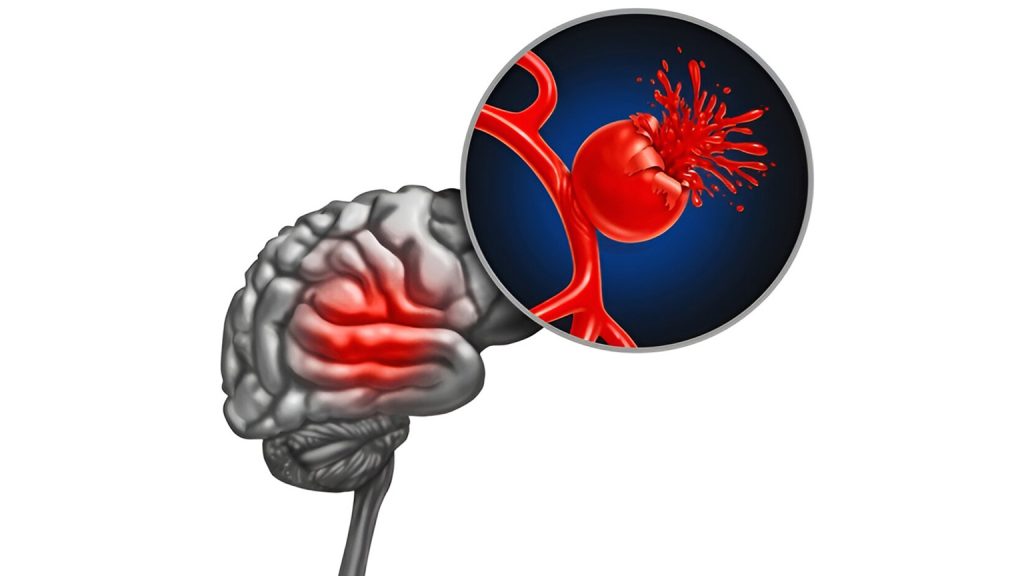
Brain aneurysm is a medical picture formed as a result of the weakening of an arterial wall in the brain and ballooning outwards.
Although this vasodilation is not always symptomatic, it leads to a life-threatening condition called subarachnoid hemorrhage (SAH) if the wall thins and ruptures, unable to withstand blood pressure.
Whether or not the aneurysm burst will be felt beforehand varies depending on the severity of the leak and the location of the aneurysm.
What Is a Brain Aneurysm and Why Does It Explode?
Brain aneurysm develops at the points of bifurcation of the cerebral arteries, in areas where the vessel wall is structurally weaker.
Hemodynamic stress caused by blood flow in the vein causes this weak area to expand over time.
The main factor in the bursting of the aneurysm is that the tension in the vessel wall (wall tension) exceeds the resistance of the wall.
High blood pressure (hypertension), smoking, intense physical activity, or sudden emotional stress can trigger rupture by increasing the pressure inside the aneurysm.
Is Aneurysm Explosion Predictable? (Stimulus Symptoms)
Although many aneurysm bursts occur abruptly and dramatically, some patients experience warning signals, which are described as “messenger symptoms.”
These symptoms occur as a result of rapid expansion or millimetric leaks of the aneurysm just before it bursts.
Leaking Aneurysm (Sentinel Headache) Symptoms
Small bleedings, popularly known as “leaks,” can occur days or weeks before a big bang.
In the medical literature, this is called “Sentinel Headache.”
Sudden and Severe Onset: These are headaches that occur suddenly but are relieved within a few hours.
Different Character: It is distinctly different from migraine or tension type pain that the patient has experienced before.
Recurrent Dose: Recurrent stimulating pains at short intervals may be a precursor to a complete rupture (tear).
Changes in the Eye and its Surroundings Before the Explosion
An enlarged aneurysm can give neurological signs by pressing on the surrounding pairs of heads (nerves).
Low Eyelid (Ptosis): It is seen as a result of the aneurysm pressing on the third pair of heads.
Pupil Dilation: One pupil does not respond to light or is larger than the other.
Double Vision (Diplopia): Loss of function of the nerves controlling eye movements.
Pain behind the eye: Sharp sensation of pain, focusing especially on a specific spot.
Expert Note: If you are experiencing a severe headache that you have never experienced before and it is accompanied by a fall in your eyelid, this may be a direct sign of an aneurysm enlargement. It is vital that you apply to a neurosurgical unit immediately.
What are the Symptoms of Aneurysm Explosion?
When the aneurysm is fully ruptured, high-pressure blood fills the space between the brain tissue and the skull (subarachnoid space).
This increases intracranial pressure within seconds, initiating characteristic symptoms.
‘Worst Headache of My Life’: Thunder Headache
The most typical symptom of an aneurysm burst is pain, medically called “Thunderclap Headache.”
Maximum Intensity: It reaches its highest intensity as soon as the pain starts (within seconds).
Explosive Effect: Patients often feel something explode or break in their head.
Resistance: Does not respond to conventional painkillers in any way.
Neurological Emergency Signs and Physical Findings
The effect of bleeding on the brain is not only limited to pain, but also disrupts the general functions of the body.
Neck Stiffness: As a result of irritation of the meninges (cerebral membranes) with blood, neck movements are restricted; the chin cannot be touched to the chest.
Fuzzy or Loss of Consciousness: A change of consciousness ranging from mild dizziness to complete coma is observed.
Gushing Vomiting: It develops due to an increase in intracranial pressure, without being accompanied by nausea.
Photosensitivity (Photophobia): Bright light increases pain and discomfort.
Seizures: Contractions that develop as a result of disruption of electrical activity in the brain.
Risk Factors in Brain Aneurysm Explosion
Not every aneurysm bursts, but certain factors increase stress on the vessel wall, increasing the likelihood of rupture.
<tdIn a suspicious situation, the first goal is to prove the presence of bleeding and find its source.Computed Tomography (CT): It provides more than95% success in showing bleeding in the first 24 hours.Lumbar Puncture (LP): In cases where there is no bleeding on CT but clinical suspicion persists, blood cells are searched by taking fluid from the waist.CT Angiography or MRI Angiography: Detects the location of the aneurysm by imaging the vascular structure.Digital Subtraction Angiography (DSA): It is the “gold standard” in diagnosis; a detailed map of the vessels is made with a catheter inserted through the groin.Treatment Options in Exploded Brain AneurysmTreatment is planned to prevent the aneurysm from bleeding again. The risk of re-bleeding within the first 24 hours of a bleeding aneurysm is quite high.Surgical ClippingIn clipping, which is a classic method, the neurosurgeon reaches the aneurysm with microsurgical techniques.A small, permanent metal clip is inserted into the “neck” of the aneurysm.This clip prevents blood from entering the aneurysm, eliminating the risk of explosion.It is usually preferred for aneurysms with a broad base or in certain locations.Endovascular Embolization (Coiling)It is a minimally invasive procedure performed intravenously without opening the skull.The catheter inserted through the groin reaches the inside of the aneurysm.The aneurysm space is filled with thin platinum wires called “coils”.The aneurysm is deactivated by forming a clot inside.Expert Note: The choice of treatment should be determined by a multidisciplinary approach (neurosurgeon and interventional radiologist) according to the location, size of the aneurysm, the age of the patient and the general health status. Both methods have their own advantages.Recovery Process After Aneurysm ExplosionAfter the aneurysm treatment is completed, a critical process awaits the patient in the intensive care unit.Vasospasm Follow-up: It is the risk of shrinkage of the cerebral vessels between the 4th-14th days after the surgery due to the effect of blood. This can cause a stroke (paralysis).Hydrocephalus Follow-up: It is a condition of fluid accumulation in the head as a result of impaired cerebrospinal fluid (CSF) absorption of blood; it may require shunt insertion.Physical Therapy: If there is neurological loss, starting rehabilitation in the early period increases the chance of recovery.This information is for general information purposes; it is recommended that you consult a health care provider for your condition.Scientific Bibliography:Aneurysmal Subarachnoid Hemorrhage – The LancetGuidelines for the Management of Aneurysmal Subarachnoid Hemorrhage – AHA/ASABrain Aneurysm Diagnosis and Management – PubMedFrequently Asked QuestionsDoes an aneurysm burst always result in death?Aneurysm bursting is an extremely serious condition, but not every case results in death. Thanks to early diagnosis, rapid surgical intervention and qualified intensive care support, a significant number of patients can hold on to life and return to their healthy lives after treatment.Can a brain aneurysm be diagnosed before it explodes?Yes, thanks to modern imaging techniques, aneurysms can be detected before they explode. Especially in MRI or CT angiography scans performed with chronic headache complaints, preventive treatment can be planned by catching the aneurysm before it causes any bleeding.Does genetic predisposition increase the risk of aneurysms?Individuals with a history of brain aneurysm in first-degree relatives (mother, father, sibling) have a higher risk of this picture than the rest of the society. It is recommended that these people be screened periodically under the control of a specialist neurosurgeon.Is there a risk of paralysis after aneurysm surgery?As in every neurosurgery operation, there are neurological risks in aneurysm interventions. However, thanks to current microsurgical methods and neuromonitoring technologies, the risk of nerve damage during the operation is minimized.Does stress trigger an aneurysm burst?Sudden and extreme emotional stress can raise the blood pressure in the body suddenly, causing the weak point (aneurysm) in the vessel wall to rupture. Therefore, blood pressure control and stress management of patients diagnosed with aneurysms are vital.
| Risk Factor | Mechanism of Action | Risk Level |
| Smoking | It disrupts the vascular wall structure and increases inflammation. | Very High |
| Hypertension | It directly increases the mechanical stress on the vessel wall. | Very High |
| Family History | Genetic predisposition causes connective tissue weakness. | Medium-High |
| Aneurysm Size | The risk of explosion increases in aneurysms of 7 mm and above. | Depends on Size |
| Excessive Alcohol Consumption | It triggers sudden spikes in blood pressure. |